

Reference Cases

Municipal Sludge Dewatering in Texas
Automated dosing cuts costs 30% by matching swings in influent volume and TSS
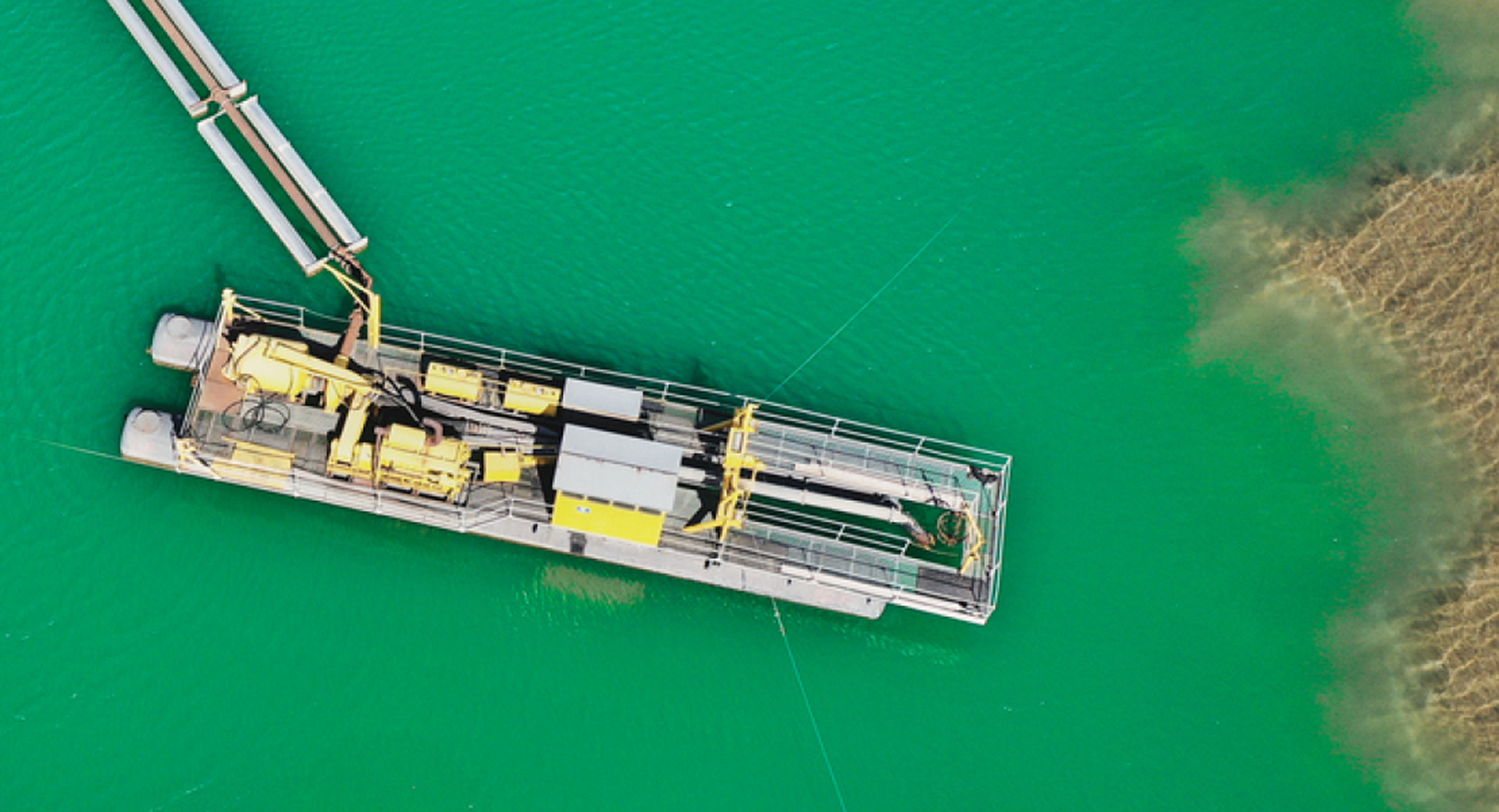
BACKGROUND:
Slurry is sent from the dredge to four centrifuges on shore by pumps. Influent flows vary depending on the dredge position and buffer tank levels, while solids content could swing from 1% to 12%.
Operators did not have a reliable way of tracking flow rate or solids in real time. Instead, they needed to continuously monitor centrifuge filtrate to make rate and chemistry adjustments. This often results in high levels of chemistry applied across all conditions to be safe—significantly increasing the total cost to treat.
The team on-site was faced with a risky and time consuming balancing act. Overdosing has severe consequences when solids unexpectedly drop, leading to torque spikes that stress the centrifuges and ultimately to shutdowns.
Conversely, underdosing lets fine particles pass through and creates wet cake or dirty filtrate, jeopardizing landfill acceptance.
APPROACH:
CarboNet deployed a two-part solution designed to simplify operations and stabilize performance:
The CarboNet field team dialled in the system during initial trials, then handed over a largely self-regulating process that could respond to field variability with minimal operator input.
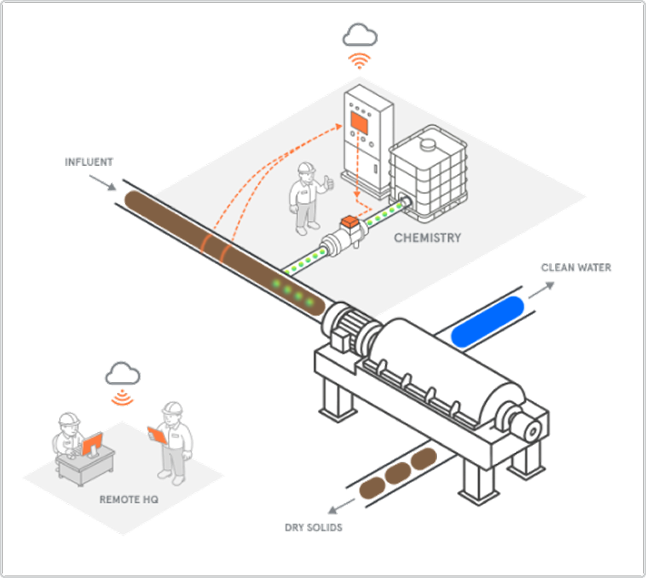
Site configuration included meters for solids and flow, dosing pumps, telemetry, and a PLC integrated with an HMI. Both the site manager and CarboNet’s field team could access site data remotely through a cloud application to monitor performance by the minute.Conversely, underdosing lets fine particles pass through and creates wet cake or dirty filtrate, jeopardizing landfill acceptance.
RESULTS:
Combining high performance chemistry with automated dosing stabilized site performance, cut treatment costs, and removed the need for outsourced, specialized labor.
The site’s operators were trained and using the system independently within a week. Special Ops handled flow changes in real time without overshooting dose—reducing polymer waste and cutting total cost to treat.
With fewer hands needed to manage dosing, the site ran leaner. Operators were freed up to focus on other tasks. The site manager could monitor performance on-the-go, and was able to use Special Ops reporting data to replace a previously manual reporting processes.
SITE DATA: GRAPH 2
When the periods of manual and automated dosing are contrasted in aggregate, the performance in solids dewatering can be observed more succinctly. Under Special Ops control , sludge weight dropped and was more consistent under treatment compared to manual operator control.
“The volume and solids content coming off the dredge were challenging to keep up with, even with many hands on deck. CarboNet’s team helped us automate the whole process. We went from chasing problems to actually running steady.“Win in water

© 2023 CarboNet. All rights reserved
