Reference Cases

Sewer Line Dewatering

Sewer Line Dewatering

SimpleFloc replaced a mix of four treatment chemistries to provide better performance at a lower price.
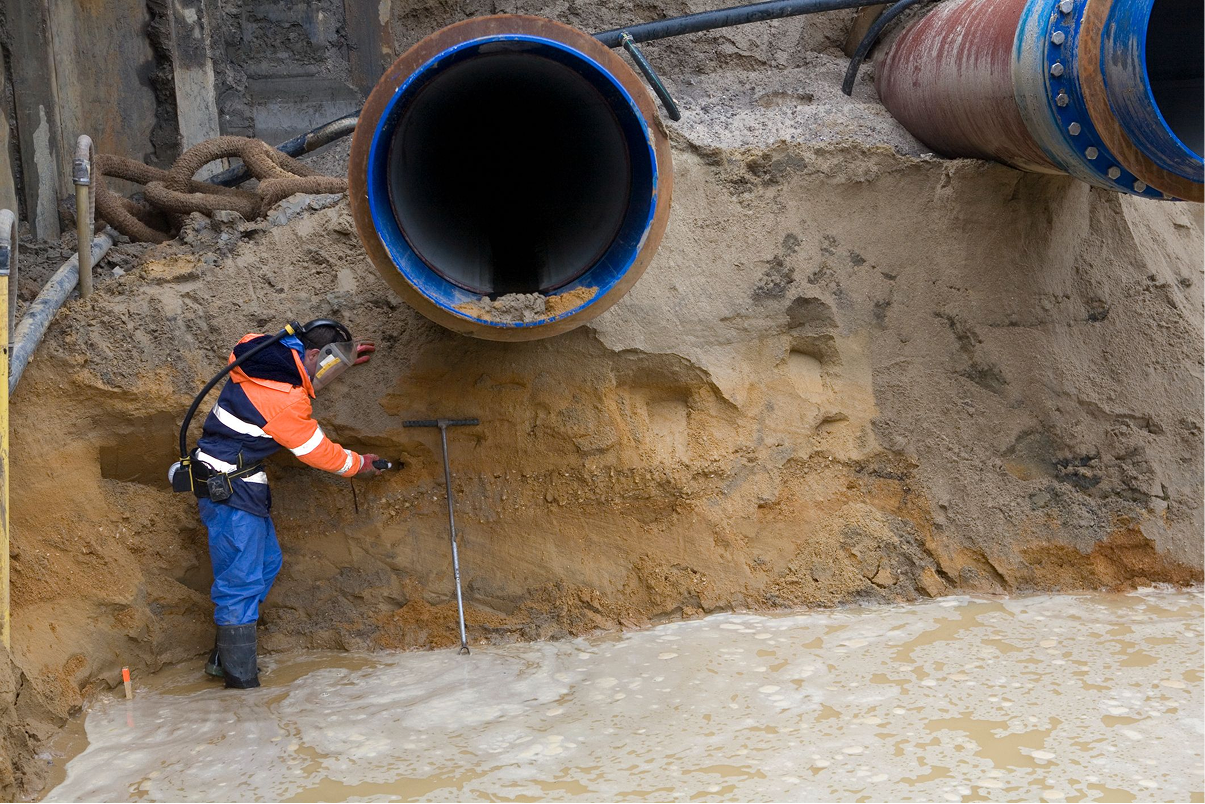
DEWATERING FOR A NEW SEWER LINE struggled with discharge levels and runaway costs, forcing a shutdown and re-evaluation of the chems.

BACKGROUND:

When a main sewer line of a large municipality reached capacity, an alternate line was built and needed dewatering for the trenches.

PROBLEM:

Unfortunately, a complex mix of four chemicals was unable to hit the <25 NTU discharge limit and, with constant adjustments slowing down construction, was driving up project costs.

In the mix: coagulant (1200 ppm), flocculant (1900 ppm), peroxide (1400 ppm), and caustic solution (280 ppm), averaging around 5000 ppm.

Including crew and equipment, the treatment package alone cost $80k/month

SOLUTION:

The introduction of SimpleFloc offered a simpler, less expensive option. Bench scale testing indicated that it could replace all four chemicals and the make-down process itself.

  • SimpleFloc hit the target discharge levels without the need for supporting chemicals—and at much lower dosing rates (250-450ppm)
  • SimpleFloc also eliminated the peroxide and caustic solutions (although these may be reintroduced if influent water quality changes or additional KPIs are added).
  • The plug-and-play nature of SimpleFloc removed make-down, reducing rig rentals, crew hours, and NPT from mis-dosing.

Additionally: SimpleFloc, to its name, simplified the necessary chemistry, but also:

  • Crews were more efficient as they didn’t have to babysit make-down
  • Significantly less chemicals were introduced into the operating envelope, ensuring no permits were breached
  • Crews enjoyed safer working conditions not having to deal with dry make-down dust or slips from emulsion slop
RESULTS
  1. • Simplified the treatment program
  2. • Cut treatment costs
  3. • Removed make-down
  4. • Boosted crew efficiency

Chemistry to compete

CarboNet’s NanoNet platform generates flocculants, coagulants, and targeting agents that that adjust in real time to changing wastewater conditions—cutting cost, dose rates, labor, and emissions.