THIS STUDY EVALUATES the application of gel chemistry at a high-throughput lagoon dredging site in Dallas, TX. The evaluation compares performance and operational efficiency of a gel-based flocculant against a conventional emulsion flocculant.
PROBLEM:
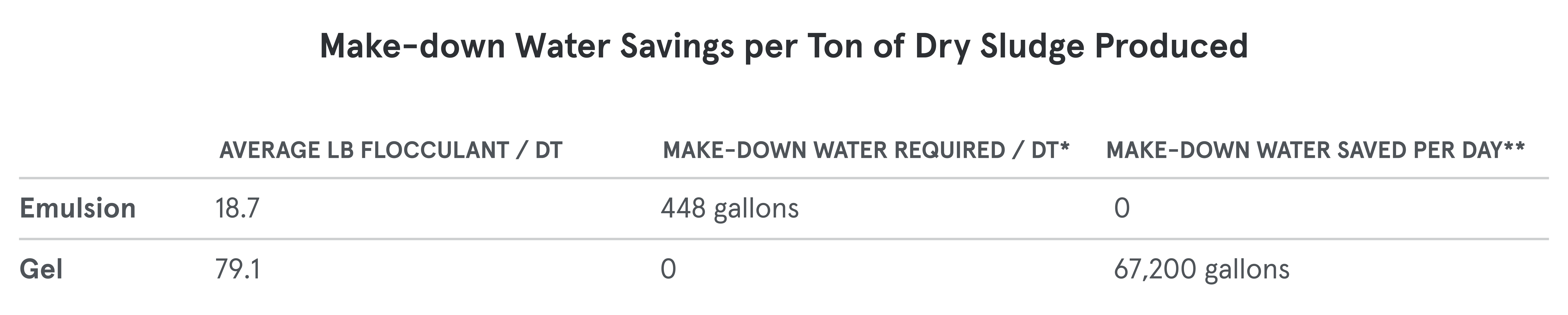
Water Demand: Conventional flocculants require high volumes of potable or filtered water to achieve proper polymer inversion and aging for treatment.
Loading Requirements: Conventional polyacrylamide (PAM) programs require a high mass of active polymer per dry ton (lb/dT) to maintain floc stability in high-throughput dredging.
Infrastructure: High flocculant sites require complex aging tanks and make-down systems, increasing operational and mechanical complexity.
GOALS:
Quantify the reduction in active PAM required per dry ton (lb/dT) of sludge produced compared to the incumbent emulsion.
Validate gel as a pre-activated flocculant to eliminate the requirement for make-down water and inversion infrastructure.
Assess the consistency of dewatering performance across five simultaneous belt filter press operations under high-throughput conditions.
ACTIVITIES:
Bench scale validation of gel chemistry on lagoon dredging site.
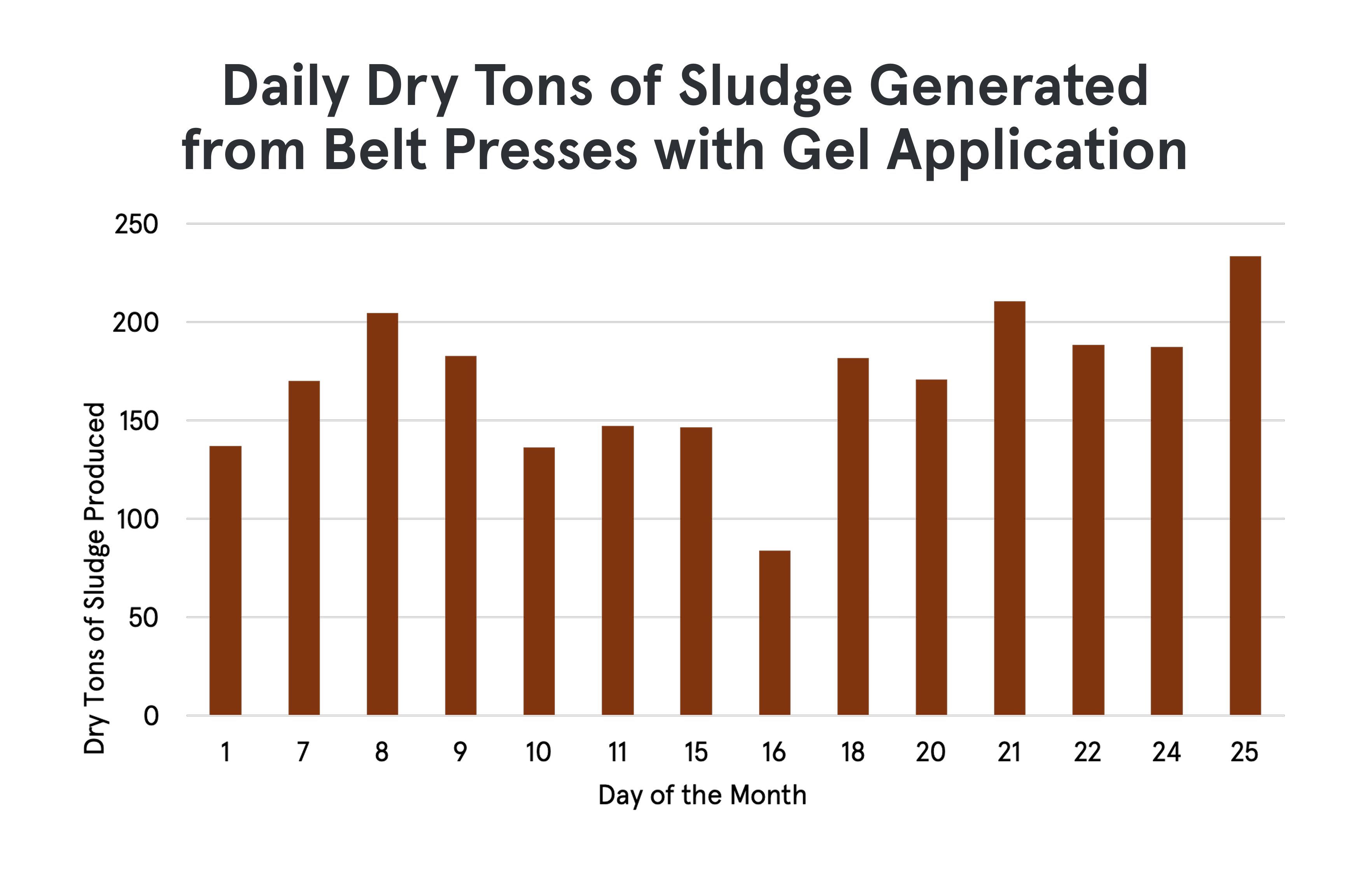
Full trial with five belt presses monitoring incoming solids, chemical dosing, belt speed, and dry tons of sludge produced.
Daily tracking of dry sludge (in dry tons, dT). Cost per dT and dosing per dT were used to evaluate site and flocculant performance.
RESULTS:
Reduced the amount of active PAM required for treatment
Eliminated need for make-down water
Delivered drier, more compact sludge that did not stick to equipment
* assuming 0.5% flocculant make-down concentration ** based on an average of 150 dT produced per day by site