

A potato processor met new, tighter restrictions on effluent turbidity using less active PAM.
BACKGROUND
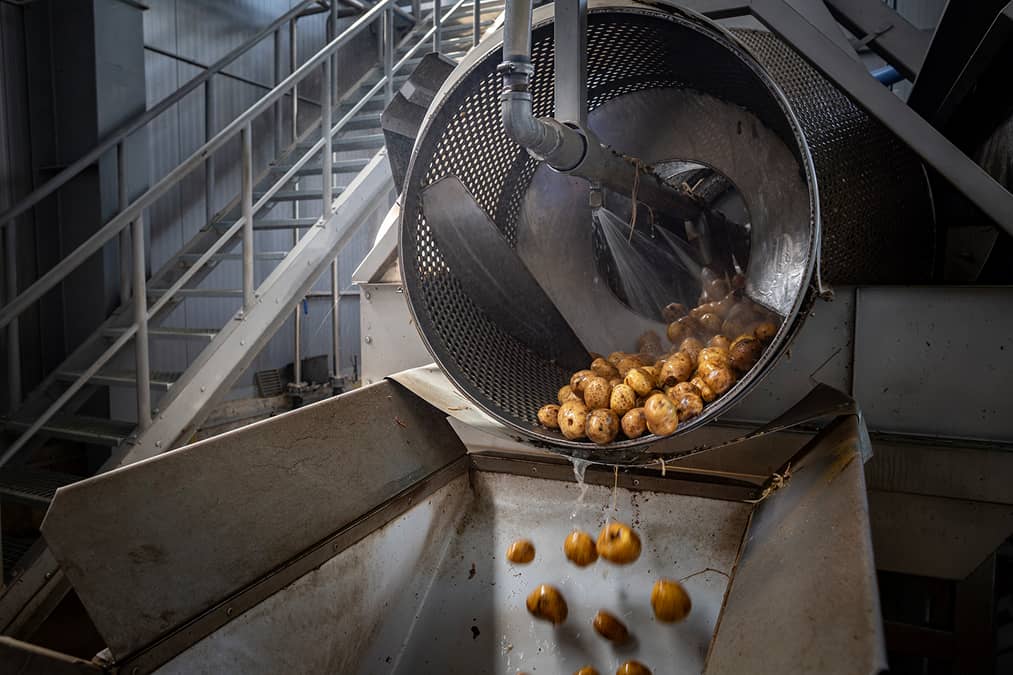
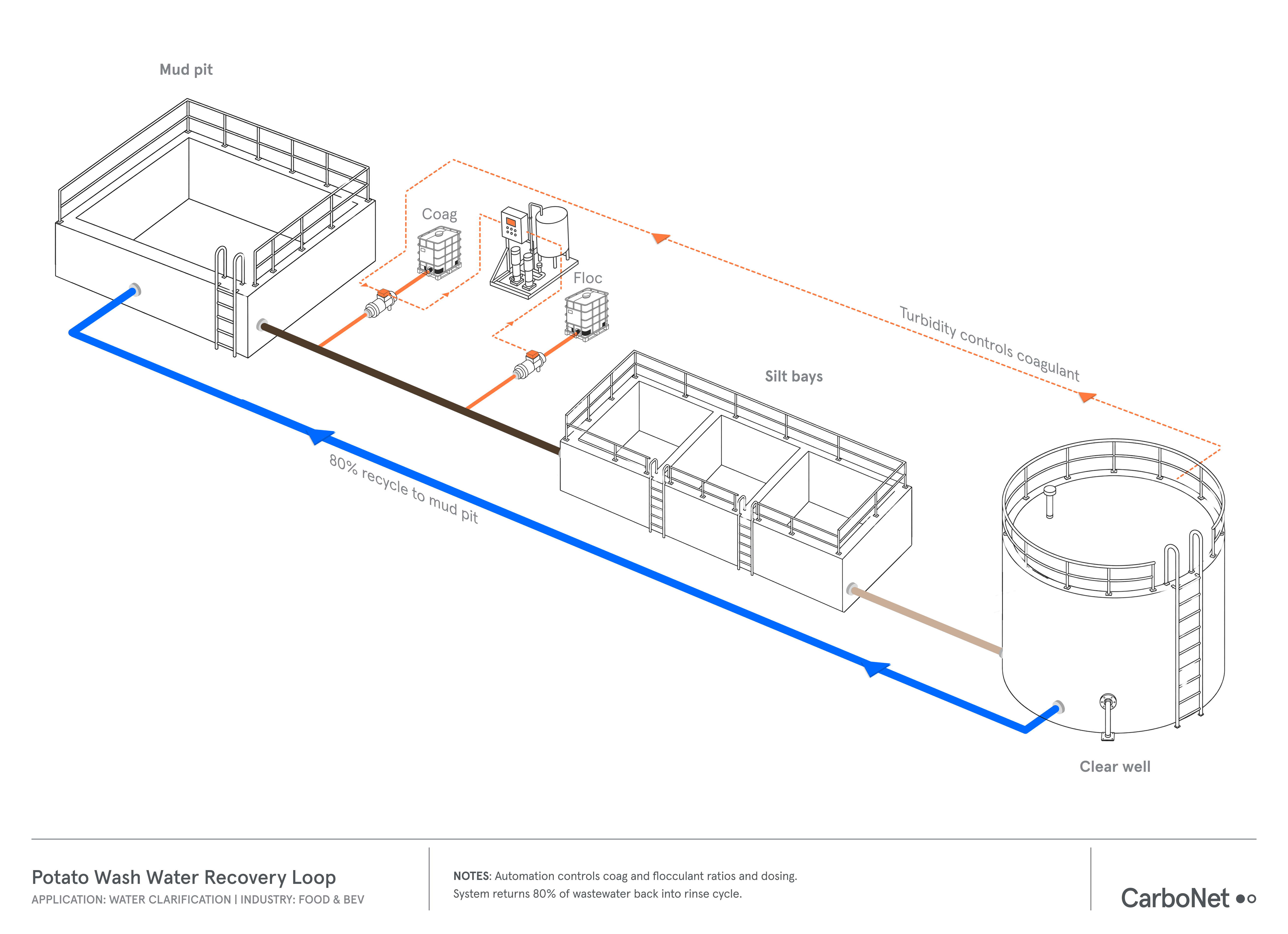
The facility uses billions of gallons of water annually to clean soil from incoming potatoes in a series of silt bays. This process generates organic wastewater high in starches, silt, clay, and nitrates which is treated with a coagulant and flocculant package.
PROBLEMS
APPROACH
CarboNet performed bench scale validation chemistries for clarification and dewatering. We noted that a gel based flocculant boosted by NanoNets allowed for a significantly lower volume of active PAM.
Full scale trials confirmed the results and SimplePrime 2000 coagulant and SimpleFloc 3050 flocculant were put into production.
SpecialOps automated dosing was also used to align chemistry dosing with incoming solids—reducing consumption and cost-to-treat.
RESULTS:
CarboNet chemistry and automated dosing kept turbidity well below the new limit while reducing residual acrylamide. This enabled more wash water to be recycled and reduced cost-to-treat.
SITE DATA: GRAPH 1
The table below shows how the incumbent chemistry compared to two proposed CarboNet chemistry packages. CarboNet Package 1 was chosen for production.
SITE DATA: GRAPH 2
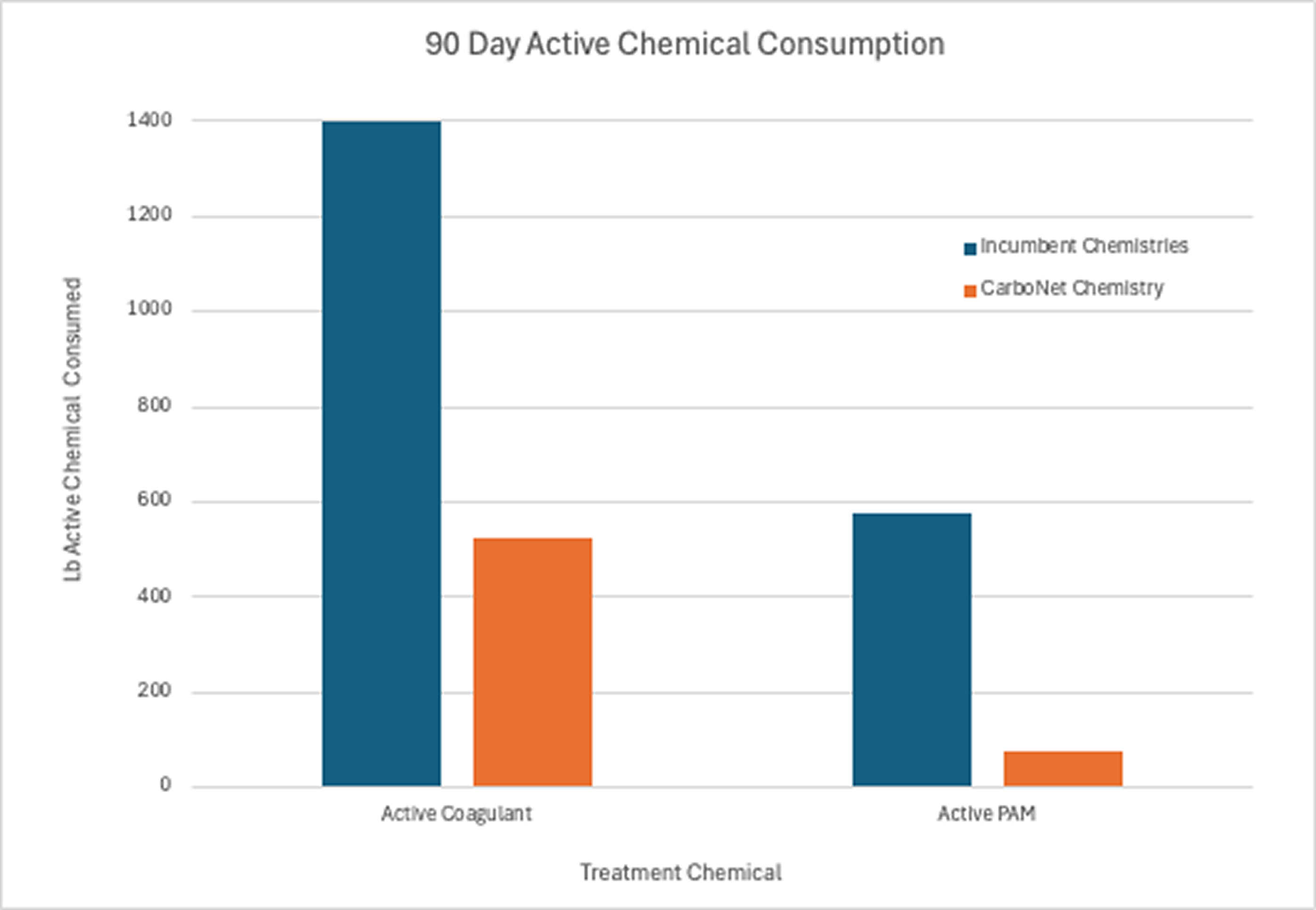
The graph below shows 90 days of site chemical consumption in pounds of active chemical consumed. Incumbent chemistry is shown in blue, CarboNet chemistry in Orange. Both the active coagulant and active PAM being dosed were reduced significantly.
SITE DATA: GRAPH 3
Shows the distribution of effluent turbidity over 90 day period. The average turbidity was 575 NTU, well below the 700 NTU target.
.png)
© 2026 CarboNet. All rights reserved

