

The facility sought to reduce effluent turbidity and associated surcharges while minimizing chemistry costs.
BACKGROUND
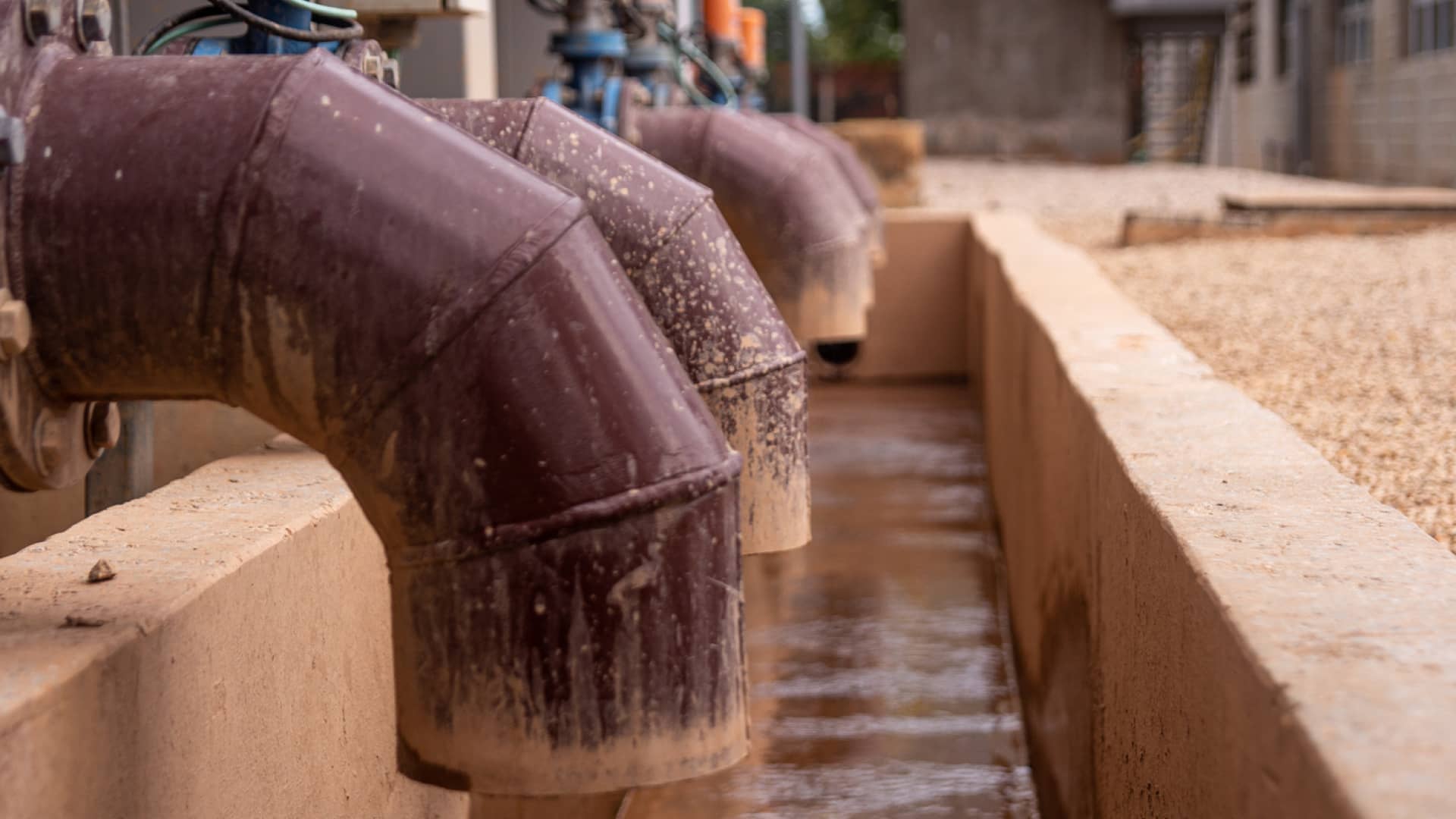
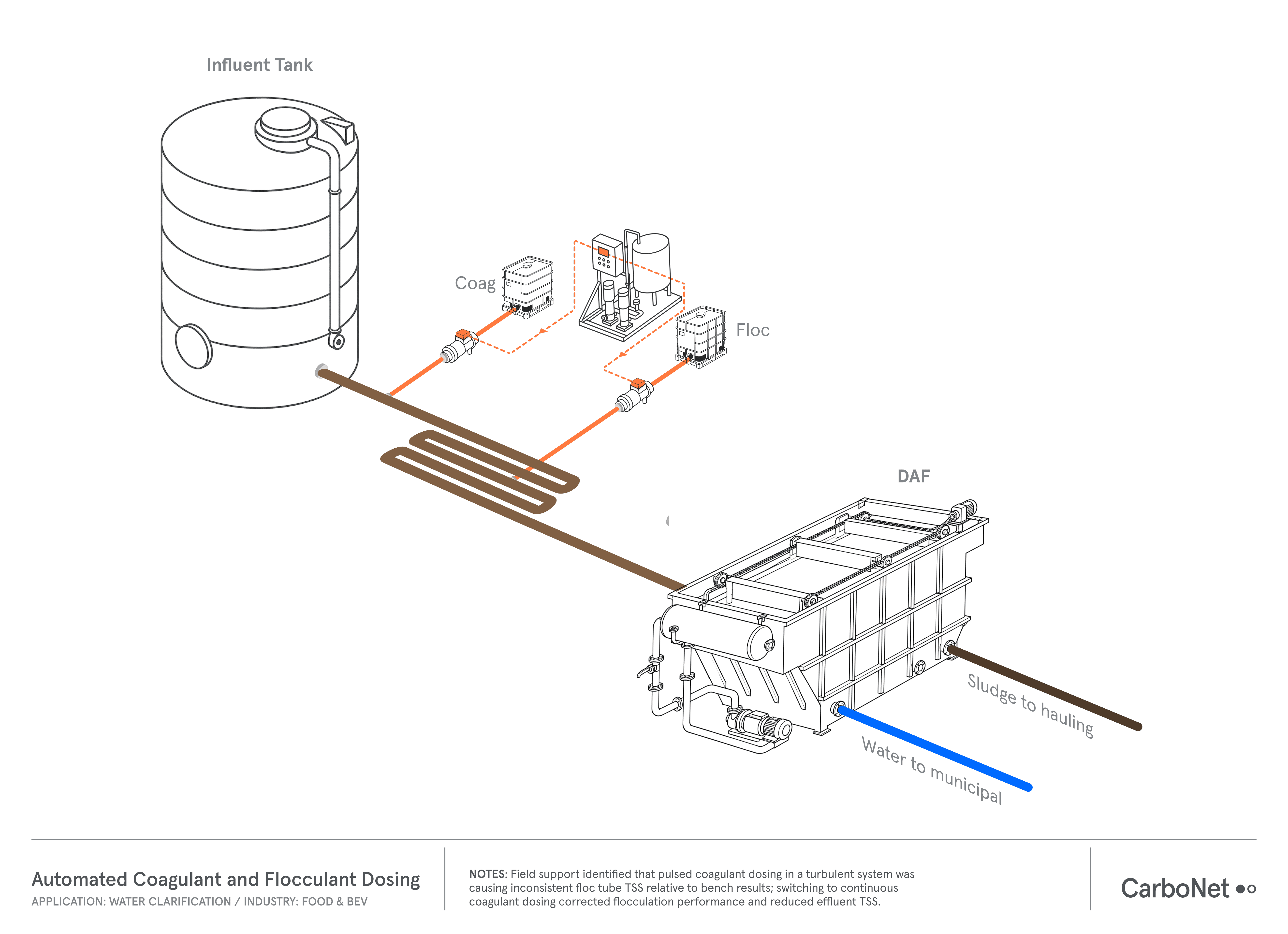
The plant processes wastewater from beef, fish, and poultry feedstocks which is treated using a floc tube and dissolved air floatation (DAF). Solids are skimmed from the DAF and disposed of. Treated water is sent to the city, where surcharges must be paid for turbidity exceedances.
The previous chemistry program included coagulant (PAC), dry cationic flocculant, and an acid / base combination to adjust the pH during treatment. Automation is used to dose coagulant and flocculant driven by readings from meters at the input to the floc tube and a clarified water holding tank after the DAF. Plant operators monitor and maintain the system, making down the dry flocculant 3 to 4 times a day by climbing a ladder and enter scaffolding above the equipment.
PROBLEM
Total suspended solids (TSS) levels regularly exceeded city discharge limits, resulting in surcharges.
APPROACH
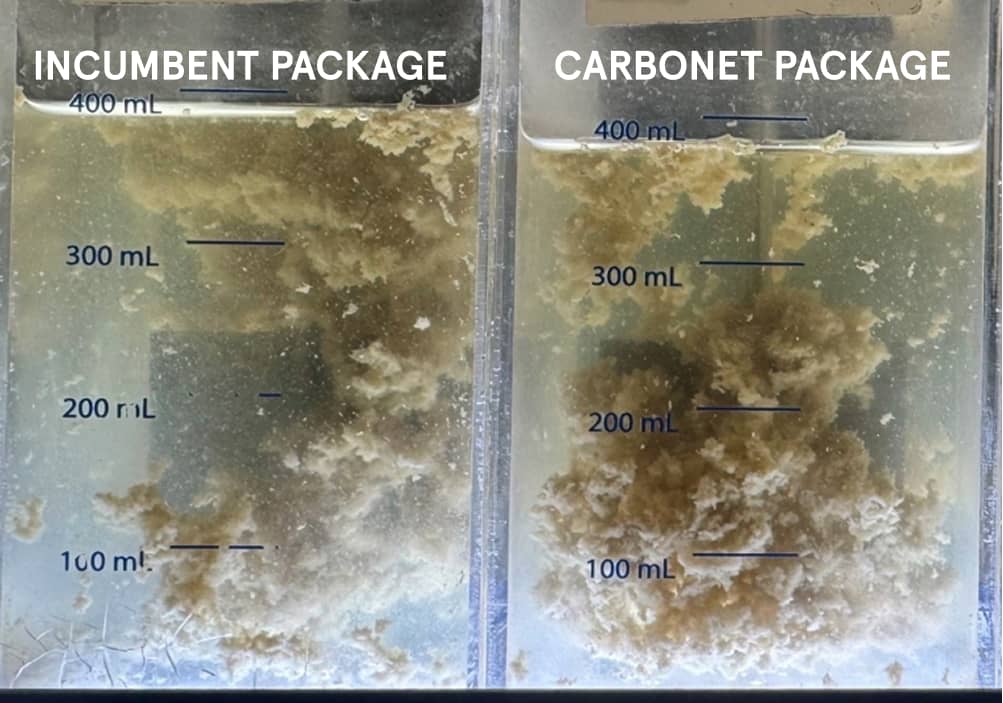
CarboNet compared SimplePrime coagulants and SimpleFloc flocculants against the incumbent chemistries. Initial bench tests showed a 42% TSS reduction could be achieved with lower active doses of active polyacrylamide using a NanoNet boosted flocculant.
The field team also investigated pH correlation to total treatment costs. A separate set of bench tests were conducted to find the impact of pH adjustment on total treatment cost— leading to a recommendation of 6.0 for an estimated 17.5% savings on all chemistries used.
During the full-scale trial, the CarboNet team made recommendations to further optimize treatment:
Using a liquid polymer instead of a dry required 1 batch of make down per day instead of 3 to 4, and did not require operators to climb ladders or enter scaffolding.
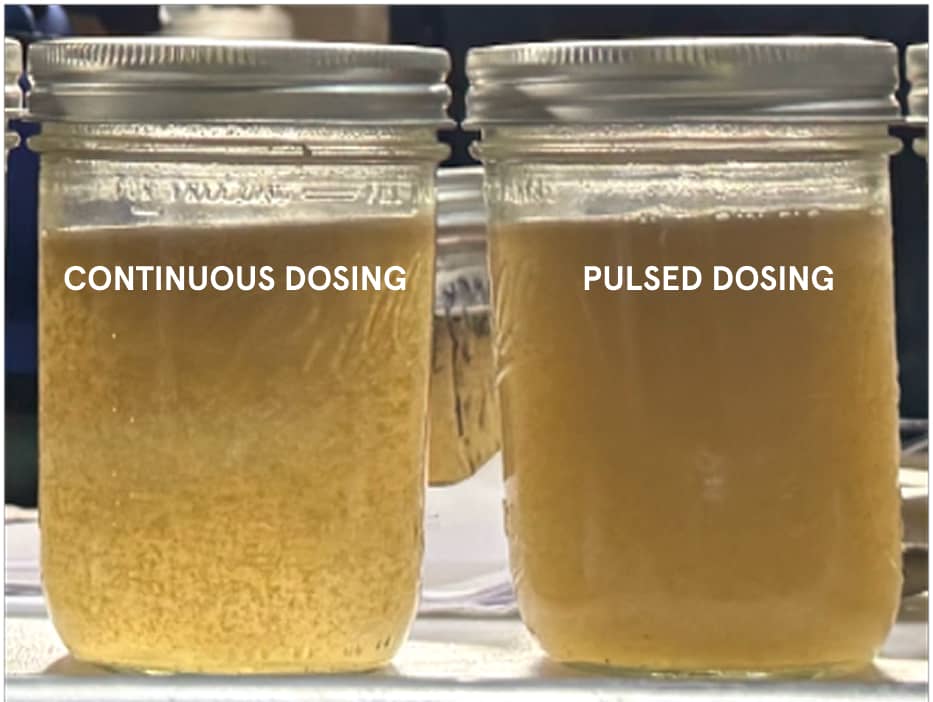
Changing out a dosing pump and switching to a continuous setting for the coagulant improved flocculation at a lower volume of coagulant.
Installing a weir to protect the meter in the clarified water tank (post DAF) helped prevent foam from disrupting the readings, ensuring more accurate and consistent flocculant dosing.
The operations team approved these changes, and the production scale trial confirmed that CarboNet chemistries would reduce both chemical cost and effluent surcharges. Treatment became more efficient at a lower cost, while removing a health & safety concern.
RESULTS:
The facility met and exceeded their goals of reducing the turbidity and associated discharge fees. The new treatment program improved performance, reduced cost-to-treat, saved operator time, and removed a HSE concern.
© 2023 CarboNet. All rights reserved

